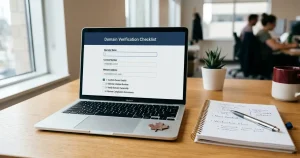
WinShark account verification and withdrawal preparation
 Available in US
WinShark requires KYC, and the practical account experience depends less on memorizing a fixed verification threshold than on keeping personal and payment details consistent. The usual document set includes government-issued photo ID, proof of address and payment-method verification. A selfie or source-of-funds check can also be requested. Verification matters most when money is moving out of the account, so preparation before a withdrawal is more useful than waiting for a document request after a cashout has already been submitted.
Table of Contents
- Accurate account details make later checks easier
- The core document set covers identity, address and payment ownership
- Account controls matter before a spending problem becomes urgent
- Withdrawals turn KYC from preparation into an operational check
- A five-minute document check can prevent avoidable back-and-forth
- Questions about WinShark account verification
- Prepared records make account checks easier to handle
Accurate account details make later checks easier
The cleanest verification process starts when the account is created. The name, date of birth, residential address and payment details entered at sign-up should match the documents that will later be used for KYC. Small differences can create extra questions because the account record and the evidence need to describe the same person.
A practical example is the name field. If an ID shows a full legal name, shortening it, using a nickname or omitting a middle name can make an otherwise simple comparison less direct. The same applies to an address: an old address on one document and a current address on the account can require an additional explanation or a newer proof-of-address document.
Payment details deserve the same attention. WinShark supports CAD-facing methods including Interac, cards, e-wallets and cryptocurrencies. The payments guide explains the deposit and withdrawal split, but the account-level point is simpler: the method used to fund or receive money can become part of the verification trail. A mismatch between account identity and payment ownership can therefore add friction at the point where a withdrawal is being reviewed.
- Enter the legal name exactly as it appears on identification.
- Use a current residential address that can be supported by an address document.
- Keep payment-method ownership aligned with the account holder.
- Update account details when a genuine change occurs rather than leaving old information in place.
These steps do not guarantee that no further checks will occur. They simply remove common inconsistencies that can turn a routine identity comparison into a longer exchange.
The core document set covers identity, address and payment ownership
KYC at WinShark centres on three recurring document types: government-issued photo identification, proof of address and payment-method verification. Together they answer three different questions: who owns the account, where that person lives, and whether the payment route belongs to the same account holder.
| Check | Typical evidence | What to prepare |
|---|---|---|
| Identity | Government-issued photo ID | A clear, current document with readable name, photo and date details. |
| Address | Proof of address | A recent document showing the same residential details used on the account. |
| Payment method | Payment-method verification | Evidence connecting the deposit or withdrawal method to the account holder. |
| Additional review | Selfie or source-of-funds material | Extra evidence if requested for the account or transaction under review. |
The useful preparation is not to upload every document in advance, but to know where valid copies are and whether the details line up. A clear image of an expired ID or an address document showing different personal details still creates a problem even if the file itself is easy to read.
Before sending a document, check four things. First, make sure the whole document is visible rather than cropped around one line. Second, check that text is readable without heavy compression or glare. Third, compare the name and address against the account record. Fourth, use the specific document category requested rather than substituting a different file that happens to contain similar information.
- Check expiry dates on photo identification.
- Make sure the account name matches the identification.
- Confirm that the residential address is current and consistent.
- Keep payment evidence ready for the method actually used.
- Respond to any selfie or source-of-funds request with the requested material rather than unrelated documents.
This checklist is especially useful because verification timing is not fixed to one universal point in the account journey. A player can encounter checks before a withdrawal is completed or while a withdrawal is under review. Document readiness reduces the chance that the process stalls for a preventable formatting or consistency issue.
Account controls matter before a spending problem becomes urgent
WinShark-associated account material includes voluntary self-exclusion and account restrictions or limits. These controls belong to account management rather than to bonus strategy or game selection. Their purpose is to create boundaries around access and spending when a player wants more distance from gambling.
Self-exclusion is the strongest form of boundary because it is intended to stop access for a chosen period or according to the available account process. Limits and restrictions can be useful earlier, when the aim is to put a ceiling around deposits, play or account activity before a session begins.
The practical advantage of setting a boundary in advance is that it separates the decision from the emotional state of a live gambling session. A limit chosen before play is easier to treat as a hard boundary than a new decision made after losses or during an extended session.
- Use account restrictions when a defined spending boundary is needed.
- Use self-exclusion when access itself needs to stop.
- Avoid raising limits as a reaction to a losing session.
- Keep gambling funds separate from money needed for bills, debt payments or essential expenses.
If gambling is causing harm, the site-wide support is gamblingtherapy.org. The account controls can create friction or block access, but outside support can be more appropriate when gambling is affecting finances, relationships or daily life.
Withdrawals turn KYC from preparation into an operational check
Verification is especially relevant before or during withdrawal processing. That makes the withdrawal stage the point where earlier account housekeeping has the clearest practical consequence. A deposit may be accepted quickly, but a cashout can trigger a closer look at identity, payment ownership or supporting documents before funds are released.
The relationship between KYC and withdrawals is therefore procedural rather than a promise about timing. Completing a clean document request can remove one source of delay, but it does not create a guaranteed processing time. Payment method, internal review and the receiving rail can all affect how long a withdrawal takes.
Before requesting a cashout, compare the withdrawal method with the route used on the account. Interac and selected e-wallet or crypto methods are among the routes used for withdrawals, while cashout availability is narrower than deposit availability overall. The cashier is the operational place to see which methods are available for the specific account at that moment.
A useful withdrawal-preparation sequence is:
- Check that the account name and address still match current documents.
- Confirm that the chosen withdrawal method is available in the cashier.
- Keep photo ID and proof of address ready in readable form.
- Keep payment-method evidence ready if ownership needs to be checked.
- Complete any additional selfie or source-of-funds request with the exact material requested.
- Avoid assuming that a fast deposit method produces an equally fast withdrawal.
The last point matters because deposits and withdrawals solve different operational problems. Deposits are designed to move money into the account. Withdrawals add identity, payment and review checks before money leaves. That is why the list of withdrawal methods can be narrower even when the deposit menu looks broad.
For payment-specific ranges and processing patterns, use the WinShark payments guide. For operator and domain checks, the license guide keeps those identity questions separate from day-to-day account verification.
A five-minute document check can prevent avoidable back-and-forth
Most preparation does not require technical knowledge. It is a consistency exercise: the person named on the account, the person shown on the ID, the address on the supporting document and the owner of the payment route should all line up. When they do, the reviewer can compare the evidence directly instead of first resolving mismatches.
Before a planned withdrawal, open the account profile and compare it with the documents you would use if asked. Check spelling, address details and document validity. Then look at the payment method. If the route belongs to another person or the account record still contains old details, resolve the discrepancy before relying on that method for cashout.
This preparation is also useful when a source-of-funds request occurs. Such a request is different from ordinary identity verification because it focuses on the origin of money rather than only on who the player is. The exact supporting material depends on the request, so the safest approach is to provide the document category asked for instead of guessing at substitutes.
There is no value in sending a large bundle of unrelated files. Clear, relevant documents with matching details are easier to assess than a folder of extra material that does not answer the specific check.
Questions about WinShark account verification
Does WinShark require KYC?
Yes. WinShark requires account verification, with identity, address and payment-method checks forming the core document set.
What documents are used for WinShark verification?
The usual set includes government-issued photo ID, proof of address and payment-method verification. A selfie or source-of-funds material can also be requested.
When does WinShark verification happen?
Verification is particularly relevant before or during withdrawal processing. The process is not tied to one fixed threshold for every account.
Can account details affect a withdrawal check?
Yes. Matching name, address and payment ownership makes identity and payment checks easier to compare against the account record.
Prepared records make account checks easier to handle
The strongest account habit is simple: keep personal details accurate and know which documents support them. WinShark’s KYC process uses photo ID, proof of address and payment-method verification, with additional checks possible when required. Because verification becomes especially important around withdrawals, preparing those records before requesting a cashout can reduce avoidable back-and-forth without creating unrealistic expectations about approval or payment speed.